
So, as I was saying in my latest news, a little while ago my daughter organised a delightful surprise trip. She dealt with everything, made all the bookings, and for three days and a half, the pair of us took in the delights of Rome.
It was much warmer than I thought it would be, which slowed us down a little, but also made for the brightest and most beautiful blue skies.
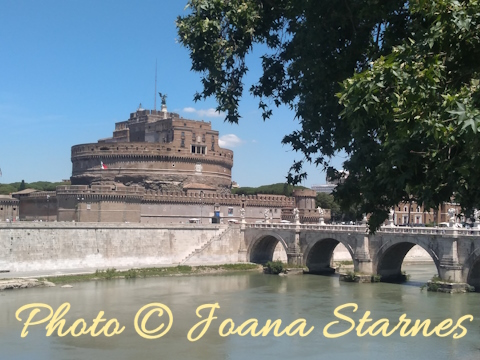
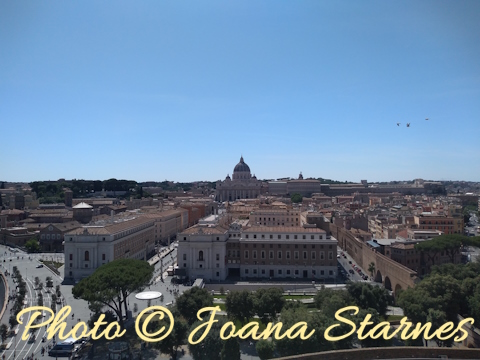
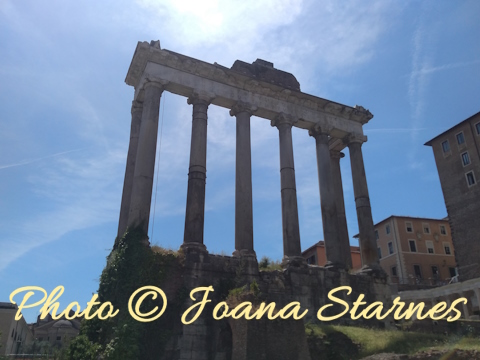
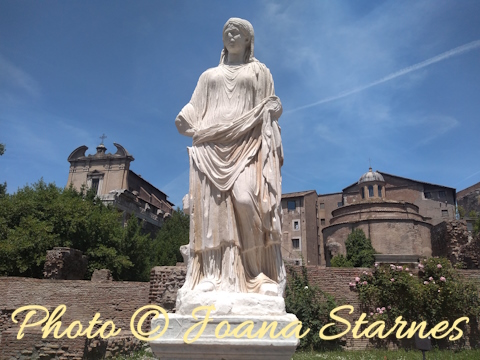
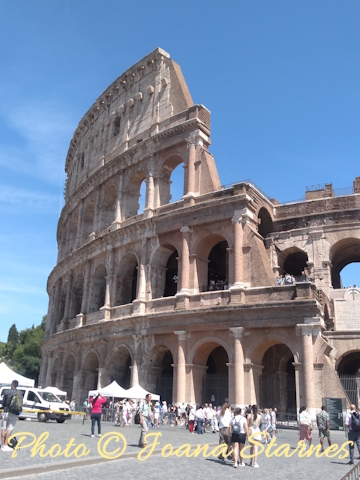
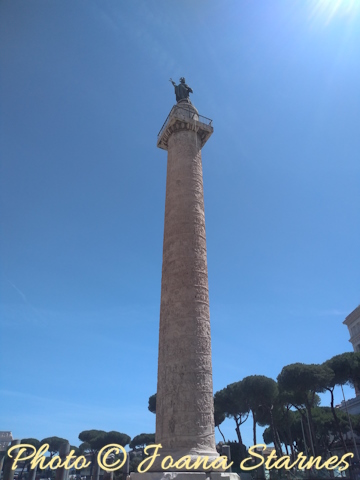
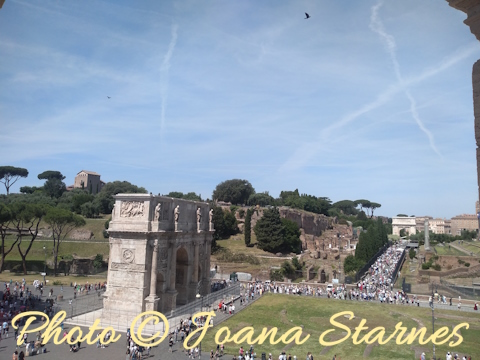
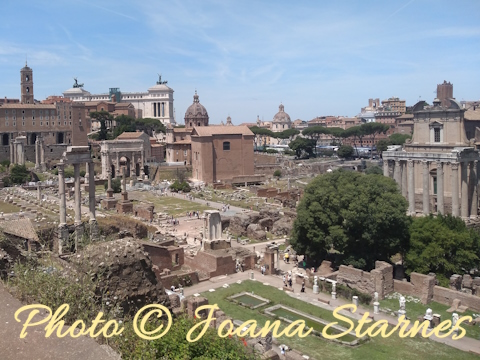
In the Middle Ages, the French theologian and poet Alain de Lille, also known as Alanus de Insulis, coined a phrase in his collection of parables and analogies: ‘mille viae ducunt homines per saecula Romam’ (‘a thousand roads lead men forever towards Rome’). The phrase, first recorded in writing in 1175, eventually became a shortened proverb that rolls off the tongue rather more easily:
‘All roads lead to Rome.’
They do indeed. It seems to me that a lifetime would hardly be enough to explore the wonders of this magnificent city, but even at a glance it’s plain to see why it was once considered the capital of the world.
It’s just as plain to see why Rome was such a beacon for the eighteenth-century dilettanti and for a great many young gentlemen embarked on their Grand Tour.
Over time, the term dilettante may have acquired patronising connotations, but in the beginning it simply meant someone who delighted in the arts. As for the young men sent to travel across the Continent to further their education, it may be said that not all of them were filled with such high-minded aspirations. For some, travelling abroad was merely an opportunity to enjoy themselves, drink, gamble and sow their wild oats. Even so, for much of the seventeenth and the eighteenth century, the Grand Tour was a regarded as a rite of passage, and the best way to complete a gentleman’s education.
Often accompanied by a tutor and a number of attendants, young men of means would sail away from British shores, expecting to be gone for as long as three or four years. During this time, it was hoped that they would acquire an understanding of the arts (painting, sculpture, architecture and music), and also become more versed in the subtle arts of social living. They were expected to gain some knowledge of languages and of the ways and usages of sophisticated European society. Ideally, they would return better prepared to take their place in the world, and better informed as to the ways to improve their country homes and their estates.
Many travellers on the Grand Tour returned home with crates upon crates of luxury goods and sumptuous purchases, with modern and ancient sculptures, and with paintings by old masters or by some of the most esteemed artists of the day.
Sometimes the Grand Tour acquisitions were displayed in purposely designed rooms, to which a select few connoisseurs were granted access:
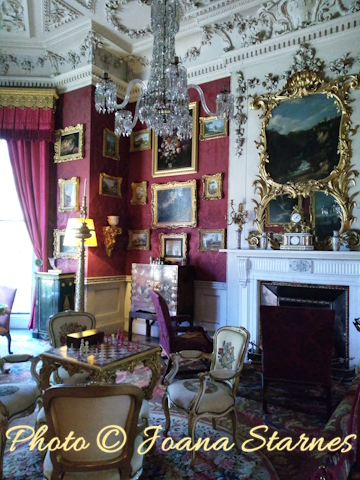
But more often than not, the artwork brought back from the Grand Tour was regarded as a badge of sophistication displayed for all to see.
It was also fashionable for the young gentlemen to bring back portraits depicting them alongside classical statues or with famous buildings shown in the background. At Chawton House there is such a portrait of Edward Austen Knight, painted as a memento of his Grand Tour. Likewise at Chatsworth, there is the portrait of William Cavendish, fifth Duke of Devonshire, painted against an Arcadian backdrop alongside a classical column and a finely ornamented urn. George Austen Knight’s portrait is by and unknown artist, but the Duke of Devonshire’s likeness was taken by Pompeo Batoni (1708-1787), one of the most fashionable artists of the day, known to have painted the portraits of around 175 notable British and Irish gentlemen during their travels on the Continent. If you visit the National Gallery website, you’ll see other examples of Pompeo Batoni’s work, such as the portraits of Sir Humphry Morice and Sir George Page-Turner. Sir Humphry Morice is shown reclining in beautiful scenery that Batoni had already used for another artwork depicting Diana and Cupid, while Sir Gregory Page-Turner is shown in the pose of Apollo Belvedere. Such hints would not have gone unnoticed by young gentlemen with a classical education, nor by their equally well-informed peers.
We shall never know if Mr Darcy could further his education with a Grand Tour. There is a chance that he missed out, unlike his father and grandfather. He might have been able to travel on the Continent during the brief peace of Amiens that lasted barely longer than a year (from 25 March 1802 to 18 May 1803), but afterwards the Napoleonic Wars put paid to most foreign travel. But he might have travelled with his dear wife after 1815 when peace was re-established.
I can’t help wondering if Mr and Mrs Darcy had ever tried spaghettoni alla stroncatura:
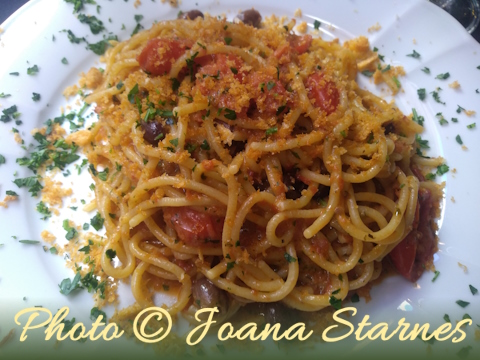
More fools them if they thought it a little too exotic 🙂 . It’s an absolutely delicious pasta dish with anchovies, olives, garlic, capers, bread crumbs and Pecorino cheese.
Beautifully decorated cocktails might have looked rather more familiar (perhaps not this exact recipe, but the term was in use since the late 1790s):
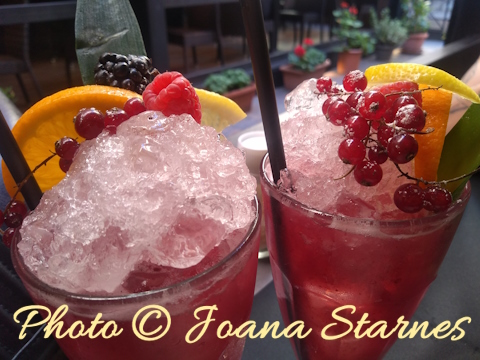
Still, I hope they had a lovely time, whatever they ate or drank and wherever they travelled.
Have a lovely summer too, and thanks for reading.
Sources:
Foreman, Amanda – Georgiana, Duchess of Devonshire, HarperCollins, 1999
Girouard, Mark – Life in the English Country House, Yale University Press, 1978
Langford, Paul – A Polite and Commercial People, England 1727 – 1783, Oxford University Press 1999
Plumb, J.H. – Georgian Delights, Weidenfeld & Nicolson, London, 1980
Online sources (accessed 19 Jun 2025)
https://archive.org/details/doctrinalealtums00alan
https://www.regencyhistory.net/blog/grand-tour-regency-history-guide
https://www.nationalgallery.org.uk/paintings/learn-about-art/paintings-in-depth/the-grand-tour
https://www.nationalgallery.org.uk/artists/pompeo-girolamo-batoni


 Joana Starnes
Leave a comment